Australia is in the middle of an infrastructure boom – but where will we get the skilled workforce that we need to deliver on this? This is not just a local challenge but a global one with significant macro-economic factors at play. So how can we best operate in this challenging environment? And what steps should organisations be taking to attract and retain talent?
Together we will explore:
About the speaker:
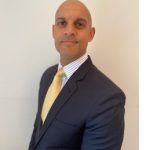
Nik Ruparel, Director, Pro NEXUS
Nik began his career as an Accountant, transitioned into Business Consulting where he worked with prominent FTSE 100 organisations before moving into Recruitment and assuming a number of Executive positions with leading Global Recruitment Consultancies in both the UK and Australia.
With over 20 years of proven experience in Executive Search and Selection and Human Resource Consulting which includes recruiting permanent and interim positions, managing single assignments and project-based recruitment that has involved the development and delivery of large-scale international sourcing campaigns. Nik has experience of partnering with leadership teams from government, private equity, not-for-profit through to ASX listed businesses, in delivering people and business solutions.
Over the last 5 years, Nik has been an active part of the start-up community, witnessing firsthand the trends and innovation shaping our economy; partaking in several forums, discussing topics that have included the future of work, the use of artificial intelligence in hiring talent, retention and attraction strategies in a constantly changing environment.
Furthermore, Nik, as part of ProNEXUS is working with peak bodies and education providers on identifying and developing skills for the future.
Presentation focuses on the Asset Information Management System at the Department of Health from its beginning to now and into the future.
Maddison’s presentation will provide an overview of how Taronga Zoo manages its diverse and aging asset portfolio in alignment with its Capital Renewal Plan. She will explore the relationship between annual maintenance budgets and long-term capital renewal needs, outlining how the capital renewal ratio is used to inform funding strategies and asset prioritisation. The presentation will also highlight specific initiatives and deliverables Maddison has introduced to strengthen maintenance strategies and improve asset performance across the Zoo. Finally, she will share some of her personal highlights and insights from working within one of Sydney’s most unique operational environments, where effective asset management plays a vital role in supporting animal welfare, visitor experience, and Taronga’s broader conservation mission.
The NSW Department of Planning Housing and Infrastructure (DPHI) has partnered with WSP to create Land iQ, a platform designed to improve infrastructure planning and empower users to make fast, informed, land-use decisions. Land iQ connects over 200 datasets to help find and analyse the over 8 million properties in NSW. Sarah will be presenting the platform, key use cases, and the lessons the team has learnt from such an ambitious undertaking.
Parks Victoria has shifted from passive to active asset management, modernising the way we manage more than 70,000 built assets across 4 million hectares across Victoria. The presentation will showcase how we transitioned to an integrated Asset Management Information System (AMIS) underpinned by strong change management practices. We will share insights from this transformation, including a case study on the Recovery Alignment to AMIS Project that improved resilience, transparency and data-driven decision making on emergency responses.
With 1 of 4 Outcomes being: Optimised infrastructure investments drive economic, environmental and social value. Key AM Strategy Recommendation’s – 1. Develop a whole of government asset management framework and 2. Implement an independent asset management assurance framework. Asset Management Policy and Assurance Goals. The presentation will include how the Strategy arrived at its recommendations, how SA Government is moving to implement them and the outcome expected.
Asset Management Supporting Maintenance and Reliability
Martin is a maintenance fitter by trade, having begun his career as a maintenance fitter and progressing to roles that saw him accountable for heavy maintenance operations in an organisation of over 600 workers. Drawing on decades of hands-on experience and leadership in maintenance environments, Martin will share real-world examples and practical insights into how asset management can and will support maintenance and reliability. His presentation will highlight the critical connection between strategic asset management and the day-to-day realities of keeping assets performing safely, efficiently, and sustainably.
More Than Maintenance: Unlocking Strategic Value in Public Infrastructure
Maintenance is often seen as a cost to be managed, but in the public works and local government context, it is a strategic lever for delivering long-term community value. Steve’s presentation explores how well-planned, data-informed maintenance and reliability practices are fundamental to achieving asset performance, managing life cycle costs, and controlling risk.
Drawing on asset management principles and real-world examples, Steve will examine how reframing maintenance as an enabler—not an expense—can improve service outcomes, justify investment, and strengthen long-term sustainability. Attendees will gain insight into how maintenance connects with broader infrastructure strategy, and how leadership, planning, and culture shape its success.
Supporting the Next Generation of Asset Management Leaders
Katherine will share her insights and experiences as an emerging practitioner in asset management, addressing key challenges currently faced by young professionals and what they seek to support their ongoing development. In this presentation, she will explore how we can encourage and support emerging professionals to ensure they are well equipped to lead the next era of asset management.
Delivering Quality Maintenance to Maximise Asset Performance
For organisations adopting whole-of-life asset management practices, asset maintenance is no longer solely focused on fixing faults, but rather on ensuring assets are maintained to prevent unscheduled downtime and perform at the required level, as outlined in the asset management plans. High-quality maintenance is essential to achieving this outcome. The application of best practices and modern technologies supports delivering the required level of quality.