

- This event has passed.
New Zealand Asset Management Symposium – Collaborating for Greater Impact
- Date: 13 August 2026
- Time: 9am (for 9.30am start) – 4.30pm
- Location: Auckland University of Technology Conference Centre
- Theme: Collaborating for Greater Impact
- Cost: $250 (Australian Dollars)
Keynote Speaker: Jessie Lea (New Zealand Infrastructure Commission, Te Waihanga) – From projects to long-term planning: asset management as the foundation
Panel Session: Both Sides of the Fence: What Public and Private Asset Managers Can Learn from Each Other
Other speakers:
- Wendy McPate (AMCouncil) – AMC 2026: Building Capability, Community and the Future of Asset Management
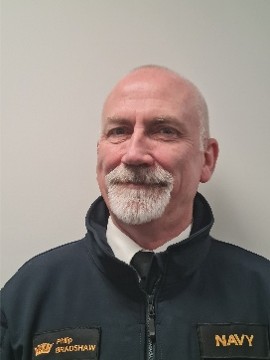
- CDR Phil Bradshaw and CDR Robyn Locke (Royal NZ Navy) – Maritime Fleet Renewal Programme
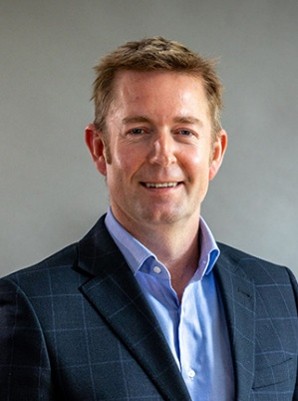
- James Kilty (Transpower) – Innovating to deliver New Zealand’s electrified future
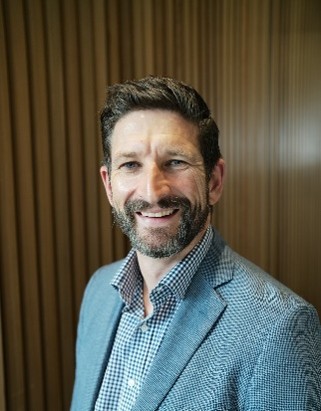
- Nathan Cammock (Auckland Transport) – Electrifying Auckland’s ferry fleet
- Dawn Inglis (Co-Lab) – REG Consistent Condition Data for NZ Roads – efficient delivery enabling effective decision making and vice cersa
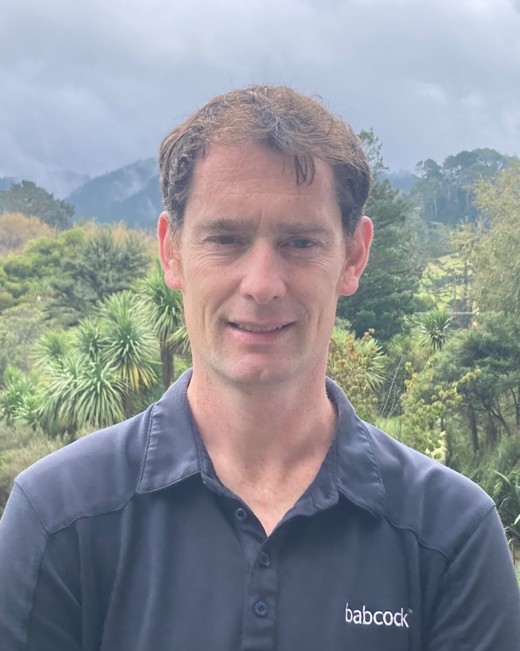
- Phillip Conroy and Christopher Butt (Babcock) – Risk based decision making and asset management planning for the RNZN
- Alex Castellanos (Unison) – Automating the visual assessment of copper conductors
Scroll down for topic summaries and speaker information:
Keynote: From projects to long-term planning: asset management as the foundation
New Zealand’s infrastructure system is under increasing pressure to deliver better outcomes from existing assets, while responding to affordability constraints, changing demand and long-term investment needs. This keynote will introduce Te Waihanga Infrastructure Commission’s role in the investment management system and outline how the National Infrastructure Plan, the Government response, and the Commission’s emerging asset management assurance function are shaping expectations for stronger, more disciplined asset management across central government.
The presentation will provide a practical overview of Te Waihanga’s Asset Management and Investment Planning Guidance, with a particular focus on meeting Cabinet’s requirements, performance metrics, and the shift from project-led decision-making to long-term, portfolio-based asset management planning. While the Guidance is directed at central government agencies, the principles are relevant to all asset-intensive organisations: better use of evidence, demand and economic forecasts; stronger whole-of-life planning; and ensuring that business cases are grounded in robust asset management and investment plans – moving beyond short-term responses and building the strategic foundations needed.

Maritime Fleet Renewal Programme
An overview of the Maritime Fleet Renewal Programme, the largest acquisition and transformational programme ever undertaken by the NZDF and some of the workforce, engineering and logistical considerations as the programme progresses.

Innovating to deliver New Zealand’s electrified future
As New Zealand electrifies in an environment where resource costs are escalating ahead of inflation, at Transpower it’s more important than ever that we innovate to meet the growing demands of our work.
As the owner and operator of the national grid and a major infrastructure builder, we put considerable effort into keeping our costs as low as possible without sacrificing reliability or moving too slowly for New Zealand’s electrification needs. We have a number of work programmes underway to do this, including carefully managing our assets to get as much life out of them as possible, and a new challenge to help us accelerate key improvement activities underway to increase throughput and find savings for the long term while delivering on committed outcomes.
This is about working smarter and building on what we are already doing well, while adapting and innovating as an organisation to continue to deliver for New Zealanders.
Electrifying Auckland’s ferry fleet
Auckland Transport’s Low Emission Ferry Programme is delivering a significant ferry asset transition, responding to the dual challenge of fleet renewal and decarbonisation. While ferries carry only around 6% of Auckland’s public transport passengers, they account for approximately 20% of its emissions highlighting both the urgency and opportunity for change.
This paper outlines how Auckland is enabling electric ferry operations through the deployment of fast charging infrastructure, including New Zealand’s first marine Megawatt Charging System (MCS) installation. Operating at up to 3.3 MW, this infrastructure supports rapid ‘opportunity charging’ during passenger boarding, enabling electric vessels to maintain existing timetables without requiring additional vessels or operational compromise.
Delivering this capability within constrained waterfront environments and legacy electricity networks has required innovative approaches to both engineering design, system integration, and ongoing asset management. Key challenges include maintaining high operational reliability, integrating emerging international standards that are still under development, and enabling the flexibility to adapt to future industry direction.
A central feature of the charging solution is the use of advanced load management, allowing ferry charging demand to be actively managed as a flexible load. This enables peak demand to be reduced, network constraints to be respected, and existing infrastructure to be utilised more efficiently without overbuilding network capacity.
As the first vessels and charging systems transition into operation, Auckland’s experience demonstrates how complex transport electrification can be delivered while balancing performance, cost, and risk to do more with less.
REG Consistent Condition Data for NZ Roads – efficient delivery enabling effective decision making and vice cersa
Consistent condition data is important in the transport sector’s approach to lifecycle asset management, benchmarking, performance management and investment decision making. The Road Efficiency Group Te Ringa Maimoa (REG) is delivering the first phase of the Consistent Condition Data Collection (CCDC) project: sealed pavement surfacing data collection of all local authority roads. This presentation outlines how the programme was developed, the business case objectives, and what the data is enabling – benchmarking and better investment decision making.

Risk based decision making and asset management planning for the RNZN
In May 2022, Babcock Australasia commenced its journey toward achieving and maintaining ISO 55001 certification. A key milestone in this process was the establishment of an effective asset management team comprising of a support, asset risk and assurance.
A structured approach has enabled the creation of comprehensive Asset Management Plans which forecast maintenance and cost until EOL. This structured approach has also enabled Decision-makers to confidently approve treatment actions based on clearly defined Risk detail incorporating evidence of impact, likelihood and mitigation details.
Risk Management is a key part of Asset Management. Knowing a risk is there is the easy part. Getting that information to the right person who can make the decision to improve it is the hard part. Technical teams and executive leadership speak fundamentally different languages, and neither side has developed adequate translation tools.
It is not easy to develop this competency across an organisation. In this presentation, we’ll look at some examples of good and bad risk communication, provide some tricks and hints on developing engineers to work well with others, and develop your skills at getting your decisions made.

Automating the visual assessment of copper conductors
This presentation explores the development of an automated approach for assessing the visual condition of overhead copper conductor at Unison Networks Ltd. The process deploys Unmanned Aerial Vehicles (UAVs) to capture pictures of electricity distribution lines, then Computer Vision (CV) and Machine Learning (ML) algorithms are applied to the photographed conductor to provide a consistent visual score. The visual score output is used as an input to evaluate the condition of copper conductor. Learnings will be shared as well as future work including the potential use of these images to improve assets’ data quality.

AMC 2026: Building Capability, Community and the Future of Asset Management
The future of asset management will not be defined by technology alone. It will be shaped by how quickly we can learn, adapt and collaborate as a profession.
As artificial intelligence, climate resilience, ageing infrastructure and workforce capability reshape our industry, no single organisation has all the answers. Building capability now extends beyond organisational boundaries and depends on strong professional communities, practical knowledge sharing and global collaboration.
In this session, Wendy McPate, National Chair of the Asset Management Council, explores how the profession is evolving to meet these challenges. Drawing on experiences from international collaboration, including engagement with the United Nations and infrastructure leaders in Washington DC, Wendy will share how the Asset Management Council is helping practitioners build capability through AI education, intelligent knowledge tools, professional pathways, technical communities and global partnerships.
This presentation is not about technology replacing people. It is about empowering people to make better decisions, build stronger connections and prepare for the next generation of asset management challenges.
Attendees will leave with practical ideas for building capability within their own organisations and a renewed appreciation of the role that collaboration plays in creating better outcomes for our profession, our organisations and the communities we serve.
Click here to register