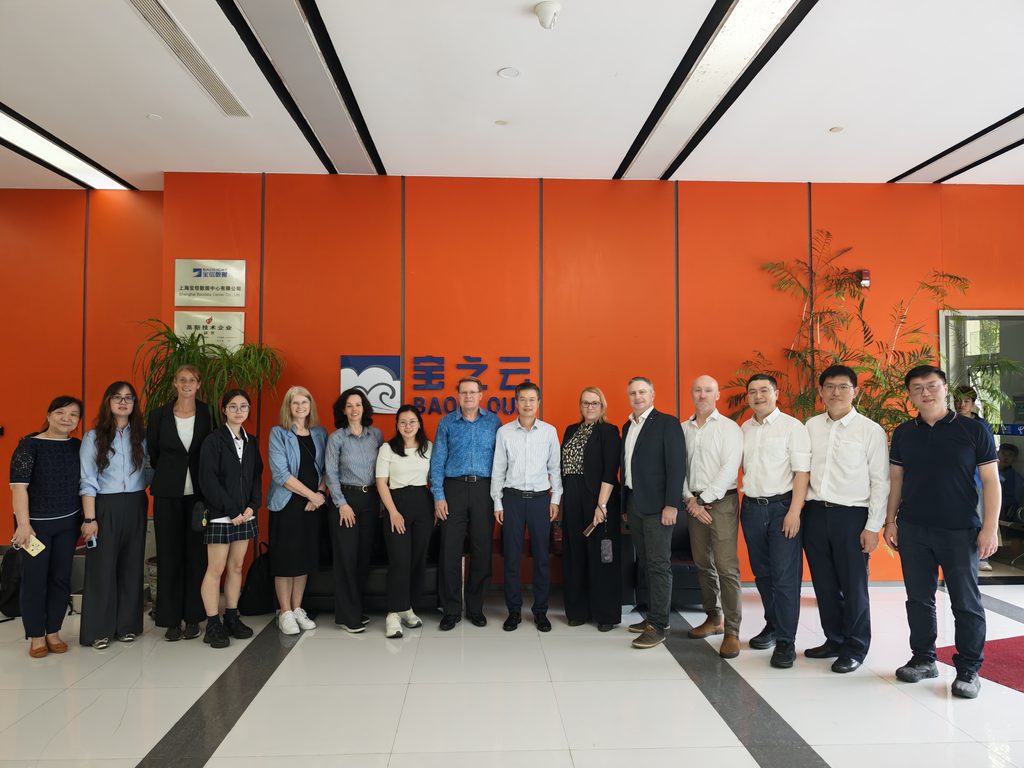
Six Cities: Guangzhou, Shenzhen, Shanghai, Jingxing, Qingdao, Beijing
The AMCouncil Asset Management study tour to China provided an opportunity to observe the country’s rapid development in digital infrastructure, robotics, artificial intelligence (AI), construction, smart cities, transport, water/wastewater management and the emerging low-altitude economy.
The program combined technical site visits, industry presentations, discussions with government and industry representatives, and cultural experiences. Visits to major infrastructure projects and technology companies demonstrated the scale of China’s investment, the integration of digital systems into operational environments, and the close relationship between manufacturing, technology development and infrastructure delivery.
Several themes emerged throughout the trip: the importance of integrated supply chains, the increasing use of automation and AI, the role of government regulation in shaping industry, and the challenge of integrating new technologies into existing infrastructure and asset-management systems.
The most significant insight was that technological capability alone is not enough. Successful implementation requires suitable standards, skilled people, reliable data, integrated systems, effective regulation and a clear business case.
The visits also demonstrated that the practical value of technology is often greatest in hazardous, repetitive or difficult-to-access environments, where it can improve safety while providing more consistent and timely information.
For Australia, there are opportunities to learn from China’s experience in digital construction, autonomous inspection, smart infrastructure, industrial manufacturing and the development of drone applications. The priority should be to identify well-defined use cases, establish appropriate governance and integration arrangements, and demonstrate measurable improvements in safety, productivity and asset performance.
The combination of technical visits, industry discussions and cultural experiences across eastern China made the tour a valuable opportunity to broaden our understanding of China’s infrastructure and technology sectors, while identifying ideas that may inform future projects and professional collaboration.