Maintenance for Resilience: The Discipline Behind Reliable Assets
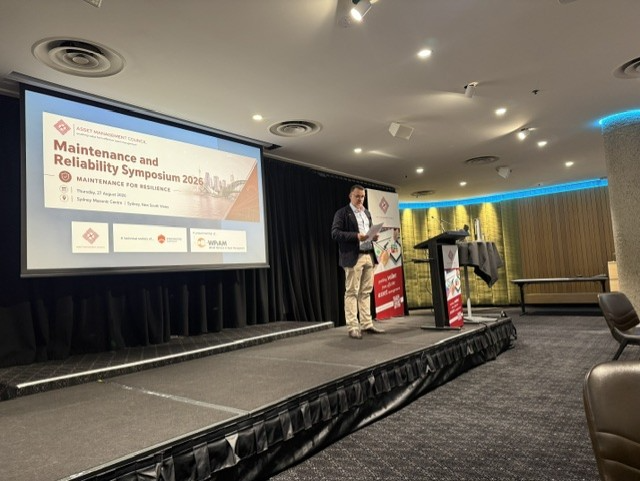
Maintenance for Resilience was the theme of the Asset Management Council’s Maintenance & Reliability Symposium, held in Sydney on 27 August 2026.
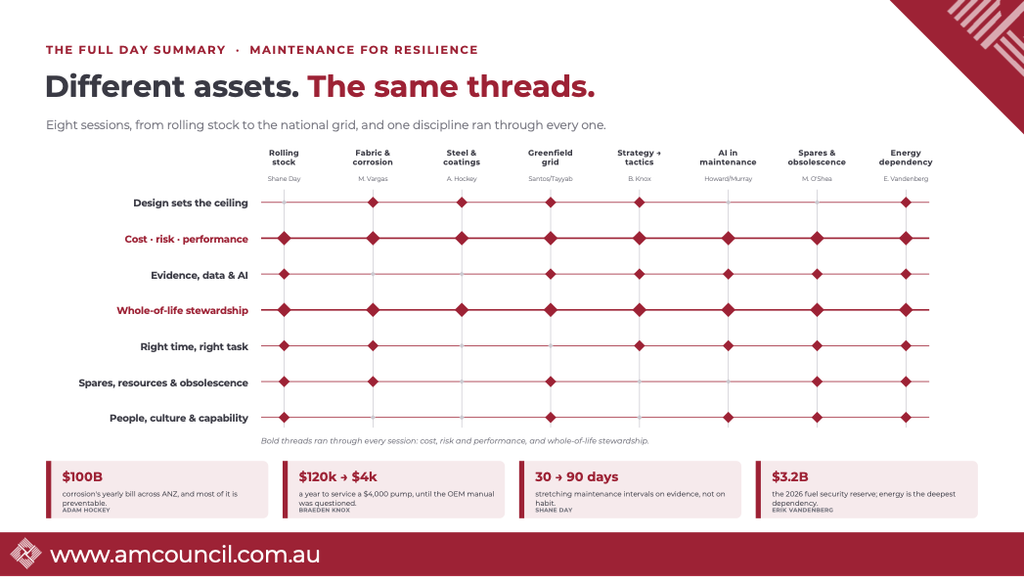
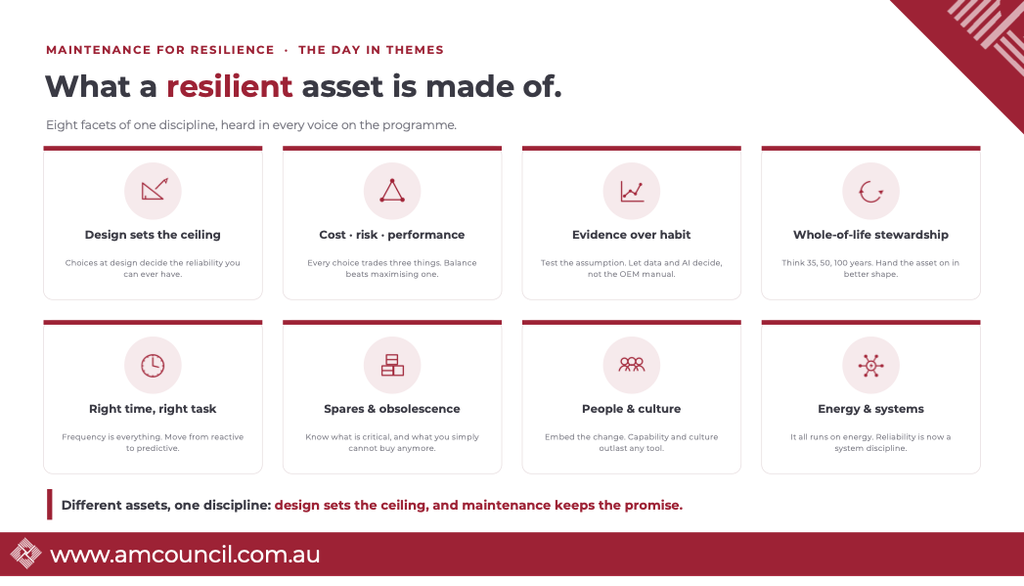
By the end of the day, one thing was clear: while the assets, industries and challenges may differ, many of the same principles underpin resilient maintenance and asset management.
From ageing rolling stock to a brand-new transmission grid, and from corrosion and coatings to artificial intelligence, spare parts and energy dependency, the discussions repeatedly returned to two fundamental threads: balancing cost, risk and performance, and taking a whole-of-life approach to asset stewardship.
Perhaps the line that best summed up the day was:
Design sets the ceiling, and maintenance keeps the promise.
The symposium brought together practitioners from across transport, infrastructure, energy, aviation, engineering and maintenance to share practical experiences of what resilience looks like in the real world.
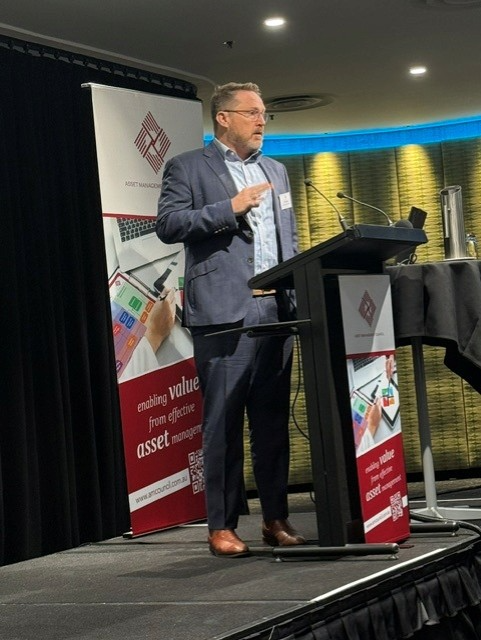
Shane Day from Downer explored the challenge of keeping ageing rolling stock moving safely and reliably, including the very real consequences of deferring necessary maintenance.
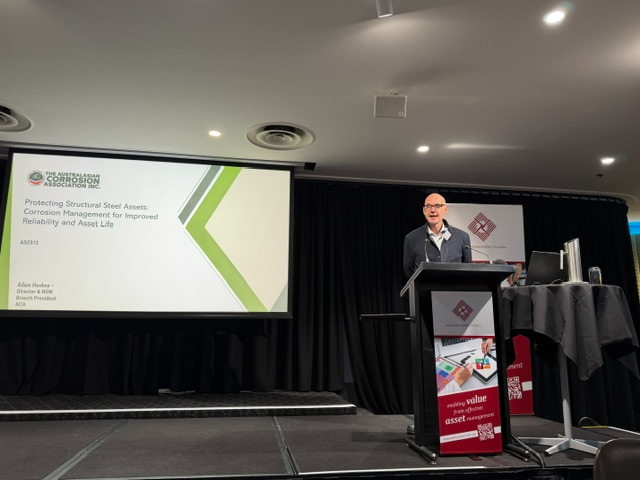
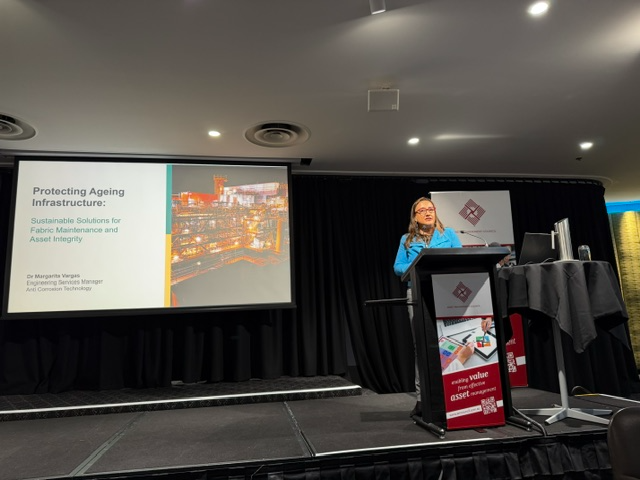
Dr Margarita Vargas from Anti Corrosion Technology examined fabric maintenance and the importance of designing corrosion out from the beginning, while Adam Hockey from DuluxGroup and the Australasian Corrosion Association discussed protecting structural steel and the important distinction between an asset’s design life and its coating life.
Juliano Cícero Santos and Muhammad Tayyab from ACEREZ provided a different perspective: how maintainability can be built into a new transmission network before operations even begin. Their presentation highlighted the value of considering maintenance, workforce capability and long-term asset performance during planning and design rather than after commissioning.
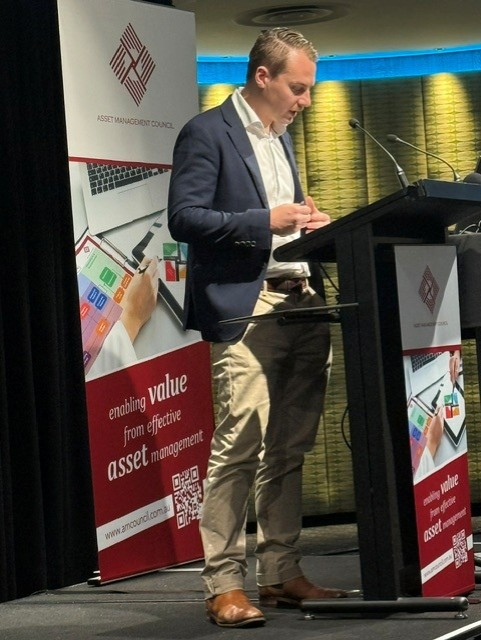
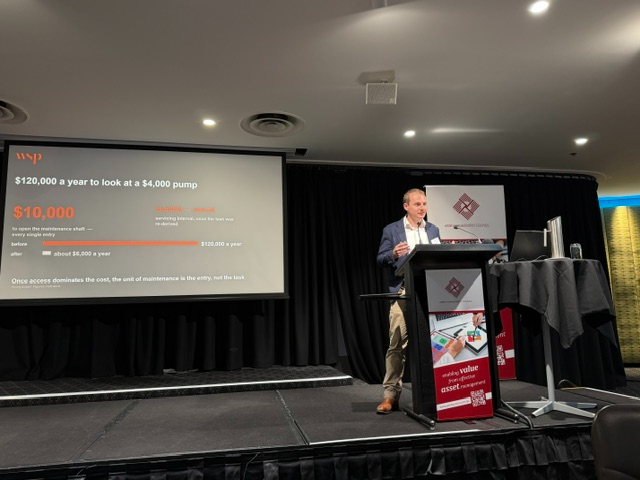
Braeden Knox from WSP looked at the critical step between strategy and execution: translating asset management objectives into practical maintenance tactics. His presentation also highlighted the significance of one deceptively simple field within a maintenance plan — frequency.
Karl Howard from I-care Group and Simon Murray from Your Maintenance Coach explored the transition from reactive to predictive maintenance and the growing role of AI, while also reinforcing that technology alone does not solve maintenance problems. The underlying processes, data, people and decision-making disciplines still matter.
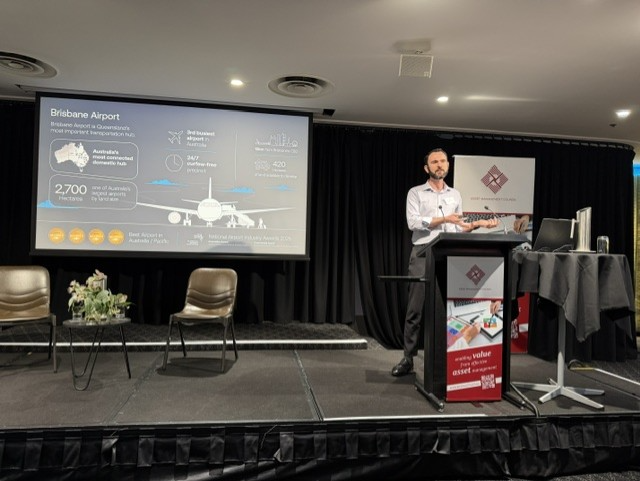
Mitchell O’Shea from Brisbane Airport shared lessons in spares management, obsolescence and the organisational culture needed to make good spares management sustainable.
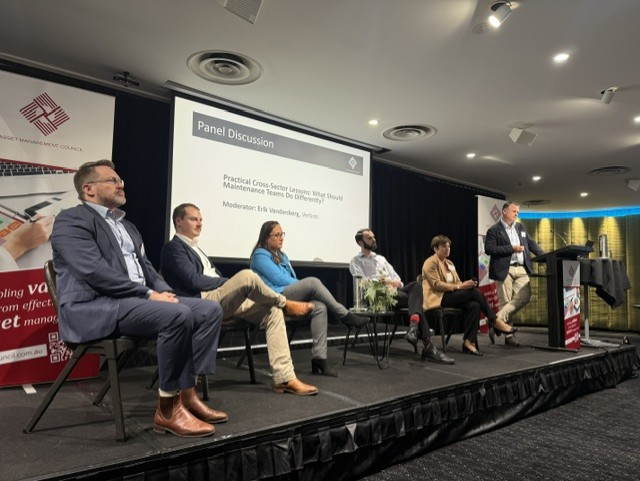
Erik Vandenberg from Verbrec and Verbrec Asset Management examined system disruption and energy dependency, reinforcing how quickly maintenance, operational resilience, infrastructure dependencies and asset management become interconnected.
A few figures that stayed with us
Several examples from the day put the scale and importance of maintenance decisions into perspective.
$100 billion — the estimated annual cost of corrosion across Australia and New Zealand, much of which is preventable.
$120,000 per year to maintain a $4,000 pump — until someone challenged the assumptions in the OEM maintenance manual.
30 to 90 days — an example of maintenance intervals being extended based on evidence rather than continuing simply because “that is how it has always been done”.
These examples reinforced an important message from across the symposium: good maintenance is not about doing more maintenance. It is about making better, evidence-based decisions about what needs to be done, when, why and at what cost and risk.
The Asset Management Council thanks all of our speakers for generously sharing their experience, lessons and practical examples, and Erik Vandenberg for helping bring the maintenance and reliability community together.
Thank you also to everyone who attended and contributed to the discussion throughout the day.
The assets differ. The discipline does not.
Presentations and event resources
Presentations and other event resources that have been made available are now accessible to symposium attendees.
Attendees should check their inbox for instructions on how to access their CPD Certificate of Attendance and the available event presentations and resources through their AMCouncil account.